
Personal Trainer for Weight Loss Singapore: What Actually Matters Beyond Calories

If you're looking for a personal trainer for weight loss in Singapore, the right approach isn't about burning more calories. It's about building a body that works better. The coaches who get lasting results focus on strength, movement quality, and habits that hold up under a busy schedule.

Why Weight Loss Is More Than a Calorie Deficit
Most people come in knowing the basics. Eat less, move more. Reduce calories in, increase calories out. And for a while, it works... until it doesn't.
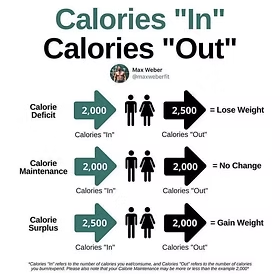
The problem isn't the equation. It's that calories are only one variable in a system that includes sleep, stress, muscle mass, hormone function, and daily movement. Strip out context and the equation becomes noise.
What shows up consistently in coaching is that people who have tried dieting alone, or cardio-heavy programmes, plateau because they haven't addressed the underlying issue: insufficient muscle mass and no structured training habit.
A personal trainer's job isn't to police your diet. It's to build the physical foundation that makes fat loss sustainable and keeps it off.
What a Personal Trainer Actually Does for Weight Loss
A good PT doesn't just run you through workouts. They give you:
A programme designed around your current capacity: not a generic plan pulled from the internet
Accountability: showing up because someone is waiting matters more than most people admit
Progressive overload: structured increases in training demand that prevent stagnation
Movement correction: poor technique leads to injury, which leads to stopping entirely
Data and feedback: what's working, what isn't, and why
For weight loss specifically, the PT's most important role is keeping you in the game long enough for results to compound. Consistency beats intensity every time.
Why Strength Training Outperforms Cardio for Sustainable Fat Loss
Cardio burns calories during the session. Strength training builds muscle, which raises your resting metabolic rate: the number of calories you burn doing nothing.
More muscle means higher energy expenditure around the clock. It also means better insulin sensitivity, improved body composition (even at the same body weight), and a body that handles food better.
The research is consistent on this. And practically, what coaching shows is that people who prioritise strength training maintain their results far longer than those who rely primarily on cardio.
This doesn't mean cardio is useless. It has clear benefits for cardiovascular health and recovery. But if sustainable fat loss is the goal, the training foundation should be strength.
Strength Training on GLP-1 Medication: Why It Matters More Than Ever
GLP-1 receptor agonists, i.e. semaglutide (Ozempic, Wegovy) and tirzepatide (Mounjaro), are becoming more common in Singapore as a medically supervised weight loss tool. They work by suppressing appetite and improving insulin sensitivity, creating a significant calorie deficit that accelerates fat loss.
The problem: a large portion of the weight lost on GLP-1 medication alone isn't fat — it's muscle. Research consistently shows that 25–40% of weight lost without structured resistance training is lean mass. For someone who already lacks a strong muscle base, this means ending up lighter but also weaker, with a lower resting metabolic rate than before — making future weight management harder, not easier.
Strength training changes this equation. When you're in a GLP-1-assisted deficit, structured resistance training signals the body to retain muscle. Combined with adequate protein intake (typically 1.6–2.2g/kg of bodyweight), it shifts the composition of what you lose > more fat, less lean tissue.
What this means in practice:
A PT who understands body composition will programme for muscle preservation, not calorie burning
Sessions should be progressively loaded — not circuit-style workouts that don't drive muscular adaptation
Recovery matters more when appetite is suppressed: under-fuelling combined with unstructured training accelerates lean mass loss
Body weight alone is a poor metric when on GLP-1 medication — strength progress and body composition are far more relevant measures of success
If you're currently on or considering a GLP-1 medication, working with a coach who understands the interaction between resistance training and body composition isn't optional — it's the difference between losing weight and losing body fat.
How to Build a Sustainable Weight Loss Plan in Singapore
Singapore's lifestyle creates specific challenges: long work hours, frequent client dinners, travel, erratic schedules, and high stress. A weight loss plan that doesn't account for this will fail.
A sustainable plan has four components:
Training frequency you can actually maintain: 2–3 sessions per week is enough if they're structured
A nutrition approach that fits your social life: not a rigid meal plan that breaks at the first work dinner
Sleep and stress management: cortisol and poor sleep directly impair fat loss; these aren't optional
A clear baseline to measure against: strength benchmarks, not just scale weight
This is exactly what PerformRx is designed to assess. The onboarding process maps your current baseline across movement, capacity, and lifestyle before any programming begins.
What to Look for in a PT for Weight Loss Goals
Not all personal trainers approach weight loss the same way. Before committing to a package, ask:
Do they assess your movement quality before writing a programme?
Do they track progress in measurable ways beyond body weight?
Is there a clear progression model, or are you doing a different workout every session?
Do they understand the relationship between strength training and body composition?
Are they coaching you, or just counting reps?
Avoid PTs whose primary tool is high-intensity circuits and calorie-burning workouts. These create short-term results and long-term burnout, and they don't build the strength base that sustains fat loss.
Common Mistakes When Training for Weight Loss
Prioritising cardio over strength. Burning calories during the session feels productive. Building muscle feels slow. Most people choose what feels good in the moment over what works over the long term.
Chasing intensity over consistency. Three brutal sessions that leave you broken for a week produce worse results than three moderate sessions you can sustain indefinitely.
Ignoring recovery. Sleep deprivation elevates cortisol, which directly promotes fat storage. You cannot out-train poor sleep.
Setting a scale target as the only metric. Weight fluctuates daily. Strength, measurements, energy, and movement quality are far better indicators of progress.
Starting without an assessment. Programming without knowing your baseline is guesswork. Good coaching starts with information.
How PerformRx Supports Long-Term Body Composition Results
PerformRx is Rx Performance's structured personal training onboarding programme. It's designed for exactly this scenario: someone who wants results, has tried before, and needs a proper system.
The process:
Session 1: Movement screen and goal-setting. We find out what your body can actually do and what's getting in the way.
Sessions 2-3: Individualised programming begins. You're not following a template. The programme is built around your assessment.
Post-PerformRx: Most clients transition into ongoing PT or a structured group programme.
The goal isn't to get you fit for six weeks. It's to build a coaching relationship that produces results you keep.
FAQ
Q: Can a personal trainer help me lose weight faster?
A PT provides structure, accountability, and progressive programming — three things most people can't reliably deliver for themselves. The result isn't just faster fat loss; it's more sustainable progress because the underlying habits and physical capacity are built correctly.
Q: How many PT sessions per week do I need to lose weight?
Two to three sessions per week is the sweet spot for most working adults in Singapore. More isn't always better. Recovery matters. The quality and progression of each session matters far more than volume.
Q: Is strength training better than cardio for weight loss?
For long-term fat loss, yes. Strength training builds muscle, which raises resting metabolic rate. Cardio burns calories during the session but doesn't change your baseline in the same way. Most clients benefit from a combination — with strength as the foundation.
Q: What should I eat when training for weight loss?
Adequate protein is the most important nutritional lever — it supports muscle retention and keeps you full. Beyond that, a modest calorie deficit beats extreme restriction every time. Your coach should refer you to a dietitian if nutrition is the primary barrier.
Q: How long before I see results with a personal trainer?
Meaningful strength improvements typically appear within 4–6 weeks. Body composition changes become visible around 8–12 weeks with consistent training and reasonable nutrition. Progress is faster for beginners and anyone returning after a long break.
Q: I'm taking Ozempic or a GLP-1 medication — do I still need a personal trainer?
Yes, arguably more so. GLP-1 medications accelerate fat loss by suppressing appetite, but without structured resistance training, a significant portion of the weight lost will be muscle rather than fat. A PT's role shifts to muscle preservation: progressive loading, adequate recovery, and body composition tracking beyond scale weight. The medication handles the deficit; strength training protects what you're keeping.
Ready to Start?
If you're ready to train with a coach who builds a programme around your goals and not a template, PerformRx is the starting point.
Three sessions. A full movement assessment. A clear plan forward.


Comments